Last Thanksgiving, thirty-seven families were on her waitlist and she called four of them. The other thirty-three never heard back, and by the Tuesday before the holiday ten of her forty-two runs stood empty at $58 a night. She is fifty-two. She was a veterinary technician at a practice in West Ashley for fifteen years, and in 2014 she and her husband bought six acres off Bears Bluff Road on Wadmalaw Island, poured a new floor in an old equipment barn and opened a boarding kennel.
Five attendants work for her now, two of them high school seniors who come after class. Her clients are families on Johns Island, Kiawah and Seabrook who travel for the holidays, and the November and December book fills by the third week of September. The book was never the problem. The week of the holiday was.
Plans change: a flight moves, a grandmother gets sick, a family decides to drive and take the dog. Last year nine families cancelled in the ten days before Thanksgiving and four never showed. She refilled three runs, by phone, between feedings. Meanwhile her attendants spent their mornings calling veterinary offices, because twenty-three dogs arrived over the two holiday weeks with a rabies, distemper or kennel cough vaccine that had lapsed, or a record nobody could find.
Two were turned away at the door on Thanksgiving Eve, with the car running and the family late for the airport. She already had an AI from Anthropic and used it mostly to write emails. We spent two hours with her at the lab and connected it to the boarding software she has kept since 2017, the kennel's text line, its email, and the shared inbox the island's veterinary clinics send records to. Then we wrote her rules down as a skill.
Now it runs the book on its own, and its trigger is an event, not a prompt. When a booking lands, it reads the dog's vaccine dates against the last night of the stay, not the first. If anything lapses before checkout, it writes to the dog's clinic directly, asks for the current certificate and texts the family once so they know what is happening. It accepts a record only from the clinic.
When a cancellation lands, it offers the run to the first family on the waitlist whose dates fit, by text with a two-hour hold, then the next, until somebody pays the deposit. It never texts a family between nine at night and seven in the morning. Since it started on October 20 it has read 212 holiday bookings. Thirty-eight had a vaccine that would lapse before checkout; thirty-five are now current, and the three it could not settle are on her list with each clinic's phone number.
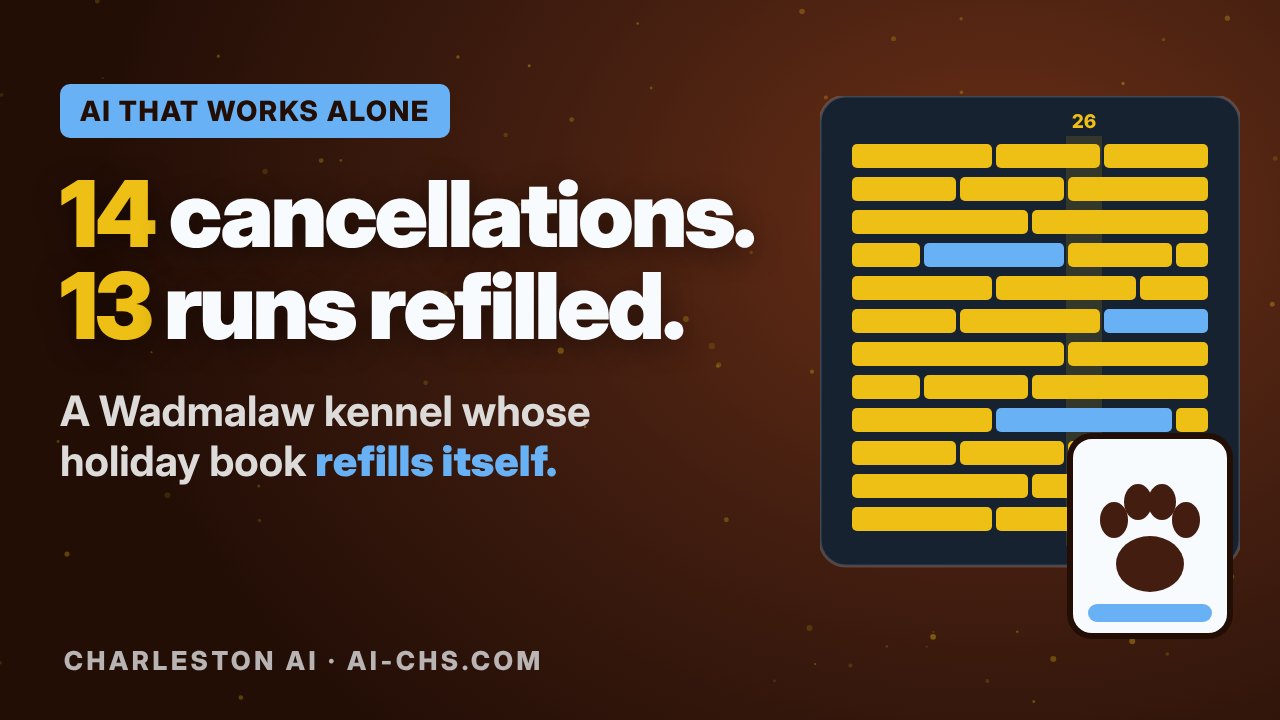
Fourteen families have cancelled holiday stays. Thirteen of those runs were rebooked, the median in twenty-six minutes. The fourteenth is still open because nobody waiting wants those dates. On the Saturday before Veterans Day, at 11:40 at night, a family on Kiawah cancelled six nights over Thanksgiving: their flight to Denver had moved.
The AI held the offer until seven. At 7:00 it texted the first family on the waitlist, a West Ashley couple with two beagles who had been turned down in September. At 7:09 they said yes and paid, and the AI asked their clinic for the beagles' kennel cough record, which would have lapsed two days before checkout. The clinic sent it at 8:15.
She was in the barn with the morning feed for all of it and read it in one line of Monday's report. That report is the only thing she gets: one text at 6:30 with the runs it refilled, the records still missing and anything it stopped on. Most mornings it ends with "Nothing needs you." Some things it never does alone.
It never admits a dog without a record from its clinic. It never books a dog with a bite history, or a dog that needs injections, insulin above all, without her yes. It never refunds or waives a deposit and never tells a family anything about their dog's health. If a dog is sick or hurt in the kennel, it calls her phone instead of texting.
"I used to spend the week before Thanksgiving on the phone," she says. "This year I'll spend it in the runs, with the dogs. That's why I opened the place."