She keeps 164 steel containers in a gravel yard off Clements Ferry Road, and on a normal weekday about 120 of them are out: on townhome pads in Point Hope, behind kitchen gut jobs on Daniel Island, beside a roof tear-off near the old Cainhoy village. Three trucks, two drivers and her. Every one of those cans fills, and when one is full a framing crew stands around it with nowhere to throw anything. Until this fall the swap requests came to her cell phone by text at every hour, and she built the next day's runs at nine at night on her kitchen table, in the order the texts had come in.
The table missed things. A can reported full at two in the afternoon waited for tomorrow's list, so the average full can sat about 25 hours before a truck came, and most mornings six or seven cans on her map were full and waiting. About one text in twelve never made the list at all until the builder called, angry. Scale tickets from the county landfill in Moncks Corner rode home in the truck door pockets, and fewer than half of the loads over the three-ton allowance ever got billed: roughly $1,900 a month, simply gone.
Cans on finished jobs sat for weeks because nobody called to have them picked up. On any given day two dozen were idle, and she was about to order twelve new containers to cover the shortage. Her AI now runs the dispatch board on its own. Its triggers are events, not prompts: a text to the business line, a driver closing a stop on the cab tablet, a photo of a scale ticket, and a route build at 4:30 every morning.
When a builder texts that a can is full, it slots the swap into whichever truck reaches it soonest, weighs that against how long every other can has been waiting, and texts back an arrival window. It asks for a photo with every swap request. It reads every scale ticket the moment a driver snaps it and bills the tonnage over the allowance to the builder's account at $68 a ton the same afternoon. When a can stops filling for three working days, it texts the superintendent to ask whether the job is done, and schedules the pickup on yes.
It has hard edges. It never drops a can on a street or in a right-of-way without a permit number on file; it texts the builder the county permit link and holds the delivery. It never hauls a load that shows tires, batteries, paint or an old refrigerator in the photo; it holds the pickup and asks the crew to pull them, because the landfill turns those loads away with a fee. And it never waives a charge.
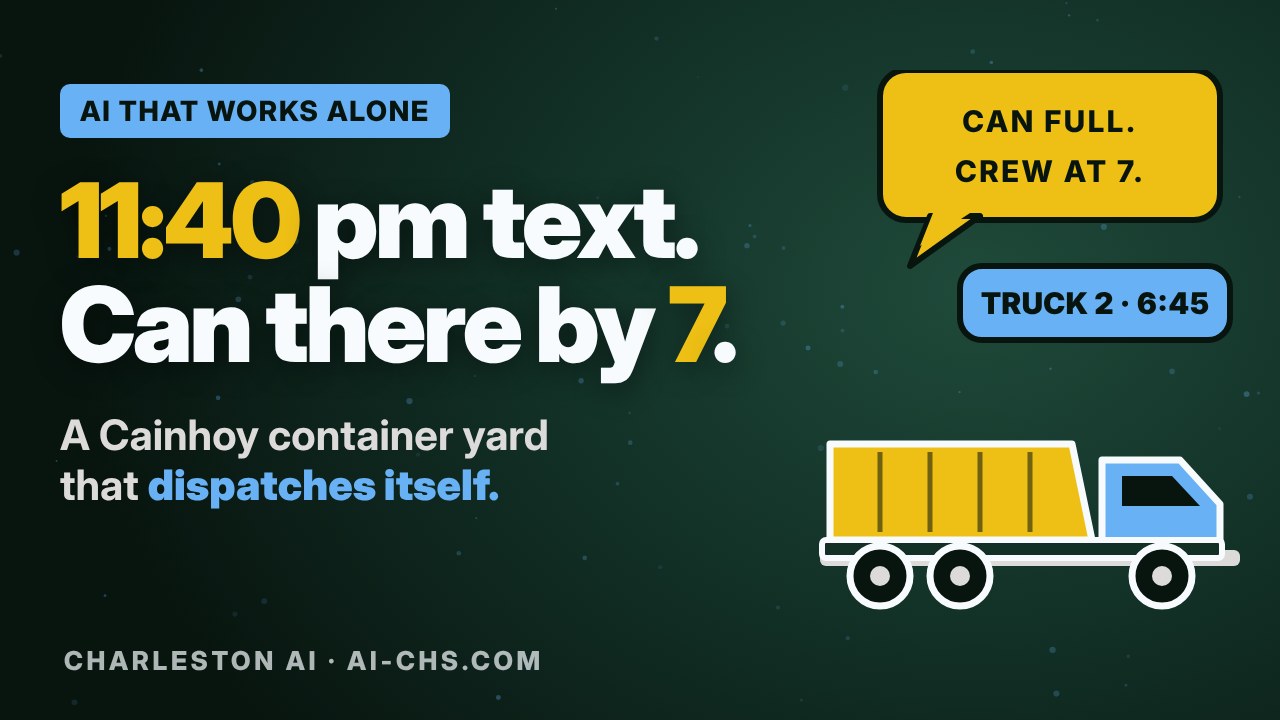
A builder who asks for a break on overage or rental days gets a polite answer and a line on her report, because discounts are hers to give. The first week it ran, a superintendent on a townhome site in Point Hope texted at 11:40 on a Thursday night: can full, drywall crew of eight arriving at seven. The AI checked that the can sat on the lot, not the street, staged an empty 20-yard on truck two, made it the first stop, and texted back a 6:45 arrival window two minutes later. She was asleep.
The empty can was on the pad before the crew pulled in, and she read about it after breakfast. That report arrives at six each evening and is usually three lines: a waiver request, a load held for tires, a permit still missing. Everything else simply happened. Ten weeks in, the average full can waits under four hours instead of about 25, and most mornings no can on the map is full and waiting.
Every overweight ticket is billed, which recovered the $1,900 a month. Idle cans on finished jobs fell from about 24 to 8, which put enough steel back in the yard that she cancelled the order for twelve new containers. Her drivers cover fewer miles too, because runs are built by drive time instead of by the order the texts arrived. "I slept with my phone on the pillow for six years, because a full can at seven in the morning is eight men standing around," she said.
"Now I read three lines at supper. I didn't know how much of my head that phone was holding."